Revisiting the 2016 Waikoloa Village Firewise Community Hazard Assessment
At Wildfire Safety Advocates, our mission started in Waikōloa Village. To understand where we need to go, we must first acknowledge the incredible work that has laid the groundwork before us. Long before our organization was established, dedicated experts and community leaders came together to create a powerful document: the 2016 Waikoloa Village Firewise Community Hazard Assessment.
Crafted through the collaboration of the Hawai‘i Wildfire Management Organization (HWMO), the Hawai‘i Fire Department (HFD), the DLNR Division of Forestry and Wildlife (DOFAW), the Waikoloa Dry Forest Initiative (WDFI), and the Waikoloa Village Association (WVA), this assessment is a masterclass in community-led wildfire planning. We mahalo them for this incredible work.
As we approach the report’s 10-year anniversary, its insights continue to serve as a living, breathing blueprint for action. Much of its wisdom remains urgently relevant, and many of its recommended actions represent ongoing opportunities for our community to embrace.
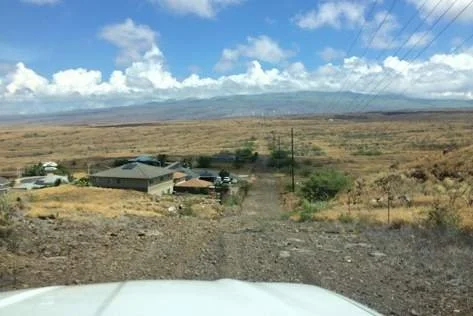
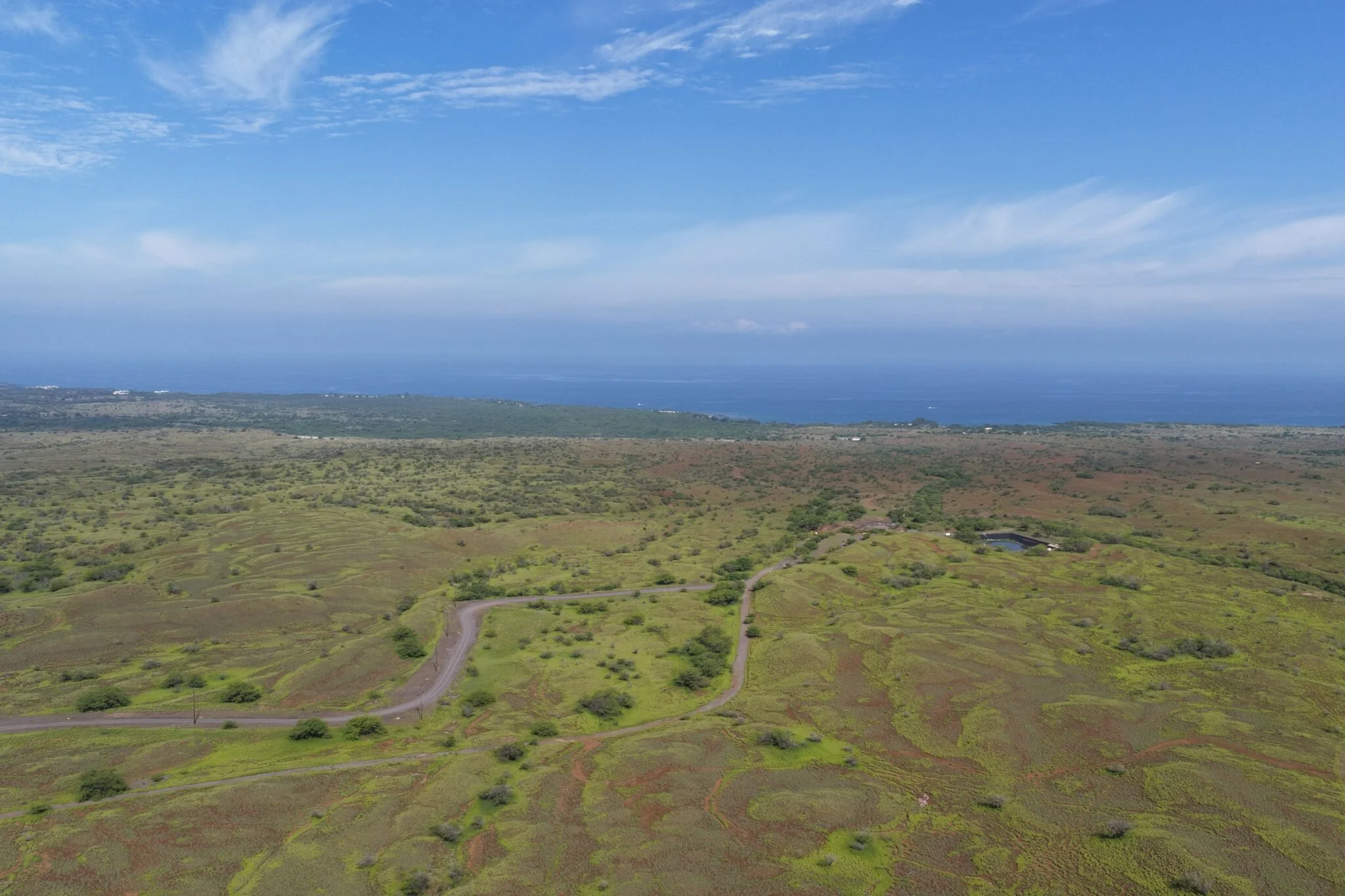
Fuelbreak along eastern boundary of the village, even while graded and graveled, requires 4-WD due to rocky terrain on hill-slopes. Photo credit: 2016 Waikōloa Village Firewise Community Hazard Assesment.
A Sobering Reality Check: Why Waikōloa Is At Risk
The assessment doesn’t mince words. It clearly outlines why Waikōloa Village is one of the most at-risk communities in Hawaii:
High Winds: With an average speed of 12-16 mph and frequent gusts over 30-40 mph, our wind—affectionately and accurately called "Waiko-blow-a"—is a primary driver of fire spread.
Fire-Prone Vegetation: The landscape is dominated by invasive, flashy fuels like fountain grass and buffelgrass, alongside highly flammable trees like kiawe and ‘ekoa (koa haole), which can create dangerous "ladder fuels."
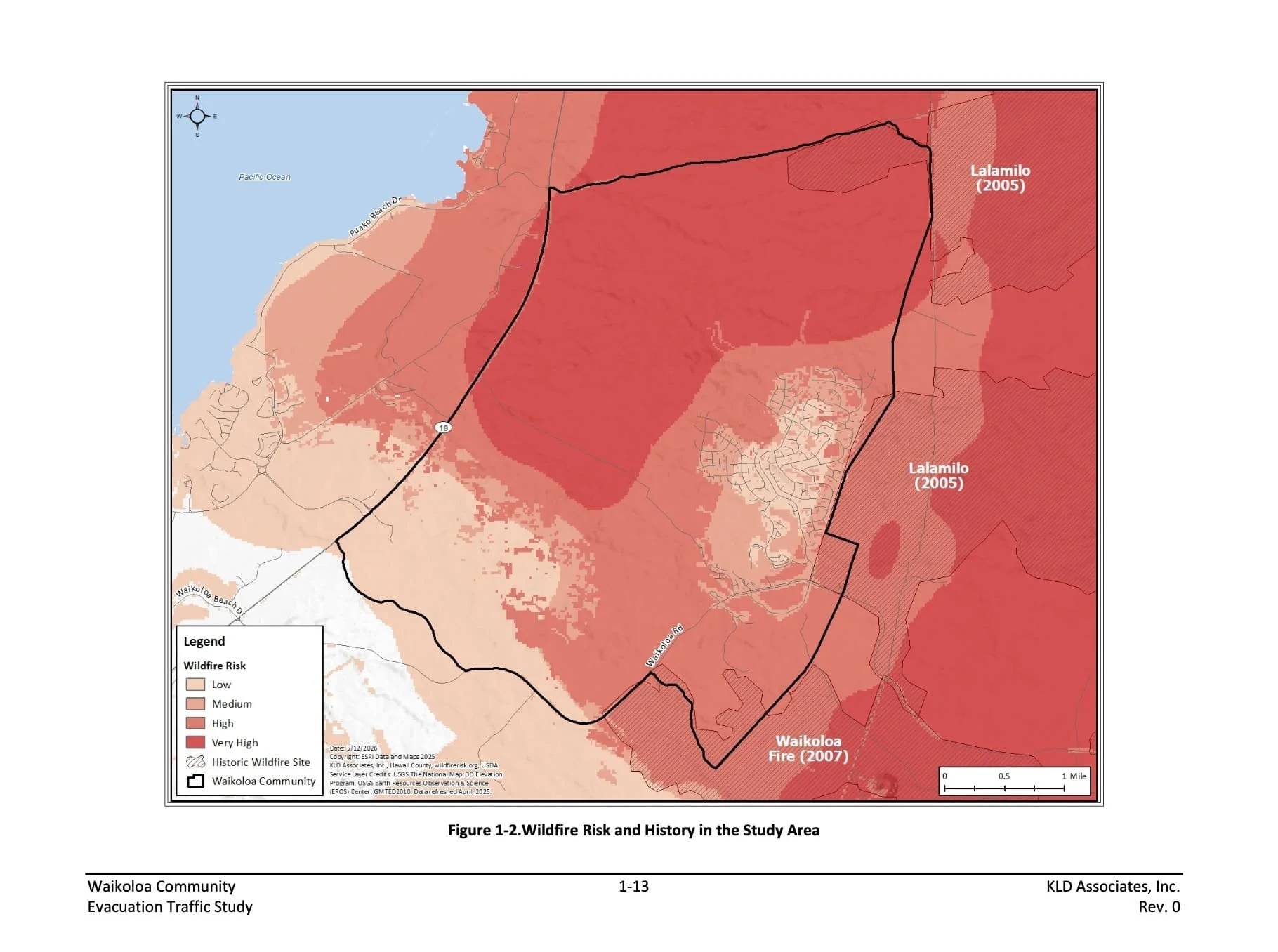
Single Access Point: Waikōloa Road remains the only paved ingress/egress for thousands of residents and visitors, creating a critical vulnerability during an emergency evacuation.
A History of Fire: The massive 2005 and 2007 fires are stark reminders of what our community is up against. The report states plainly: "It is only a matter of time before the next large wildfire threatens the community."Our Impact: What Your Support Fuels
The Heart of the Report: A Three-Part Path to Resilience
The assessment’s core genius is its practical, three-tiered framework for addressing these risks. It moves the community from being reactive to becoming proactive and ultimately fire-adapted.
The recommendations are organized into:
Immediate Stop-Gap Protection Priorities: Actions for right-now safety.
Longer-Term Protection Measures: Sustainable strategies for lasting change.
Working Toward Becoming Fire-Adapted: A cultural shift in how we live with wildfire.
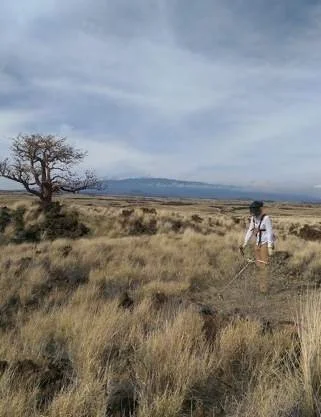

A Clash of Codes: WVA Landscaping Rules vs. Firewise Best Practices
The assessment also highlights a critical conflict that still exists today: the disconnect between traditional homeowners' association (HOA) landscaping ideals and the urgent need for Firewise practices. The 2016 report notes that Waikōloa’s landscaping is often "a legacy of previous generations... that did not take into account wildfire risk."
Many common plants required by or popular within HOAs, like Mexican fan palms, coconut palms, and ironwoods, are explicitly identified in the report as highly flammable and hazardous. Perhaps the most ironic example cited is that ‘uhaloa, a native, culturally significant plant that is drought-tolerant and not considered a fire concern by firefighters, is ironically listed as a "weed" in the WVA's Covenants, Conditions, and Restrictions (CCRs).
This creates a perverse incentive where residents may feel obligated to plant water-guzzling, flammable exotic hedges to maintain a "manicured" look that complies with old standards, while potentially being discouraged from planting tougher, safer native ground covers. The report’s recommendation is clear and remains unaddressed: "Amend WVA CCRs to encourage native and adapted, drought-tolerant choices for landscaping."
This is not about lowering standards; it's about updating them to reflect the critical reality of wildfire risk. It's about aligning our rules with the science of survival, encouraging a new aesthetic of resilience that values firewise native beauty over flammable, thirsty, and outdated landscaping traditions.
Key Recommendations: A Decade-Old To-Do List That Still Resonates
While the report contains dozens of specific observations, several overarching recommended actions stand out—actions that remain just as critical today as they were in 2016.
"The community and first responders are far from having adequate access to and from the village. This is consistently a top concern of residents." (Page 33)
On Access & Ingress/Egress: The report praised the initial creation of the emergency access road off Hulu Street but noted it was unpaved, difficult to traverse, and needed significant improvement. The recommendation was to continue improvements, add signage, and—crucially—"Increase number of well-thought-out emergency access and ingress/egress roads." The conversation about a reliable second access route is not new; it is a decade-old imperative for saving lives.
On Fuels Management: The report highlighted the severe risk of continuous grasslands surrounding the village and within vacant internal lots. It commended innovative trials like the WVA Interior Lot Goat Grazing Pilot Project and urged the community to expand these efforts. The longer-term goal was to convert these high-fuel areas into permanently maintained features like green spaces, community gardens, or native restoration plots. Strategic, managed grazing was presented not as a one-time fix, but as a viable, long-term solution requiring consistent investment and scheduling.
On Community-Wide Education & Culture Shift: Perhaps the most profound recommendation is the need to become a Fire-Adapted Community (FAC). This means shifting from a culture of reactivity to one of proactivity. The report suggested:
Amending WVA CCRs to encourage native, drought-tolerant, Firewise landscaping and discourage hazardous, water-intensive plants.
Holding regular wildfire education events for all ages.
Fostering a "neighbor-to-neighbor" sharing culture.
Addressing the critical issue of illegal green waste dumping, which adds dangerous fuel loads to our wildland areas.
"Becoming fire-adapted includes shifting the cultural preference away from landscaping/ building materials that create hazardous conditions." (Page 35)
On Home Hardening & Defensible Space: The assessment provides excellent, visual examples of "Successful Firewise Modifications" that homeowners can implement, such as creating "fire-free" zones around structures, breaking up ladder fuels, and using xeriscaping with native plants. The message is clear: individual homeowner action is the first and most important line of defense.
Native Plants: The Beautiful, Firewise Solution
A key and empowering takeaway from the assessment is that enhancing our safety can also mean enhancing the natural beauty and ecological health of our community.
The report strongly advocates for a shift towards native and adapted, drought-tolerant plants, which are inherently more Firewise. These plants, like the resilient ‘ilima (with its cheerful yellow flowers) and the fragrant pōhinahina (beach vitex), are not just survivors; they are thrivers in our arid climate. They retain moisture better than non-native ornamentals, meaning they are harder to ignite and don't create the same volume of dry, dead debris that acts as kindling. By choosing natives such as the hardy koa‘ia tree or the culturally significant wiliwili (whose blossom is featured in the WVA logo), homeowners can do more than just create defensible space. They can reduce water usage and maintenance costs, support native pollinators, and participate in the perpetuation of Hawaii's unique natural heritage.
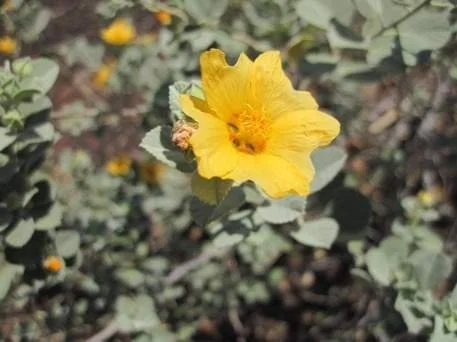
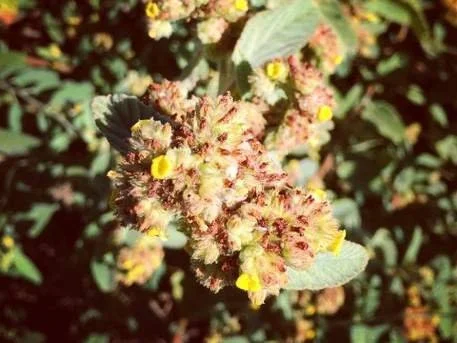
The report points to resources like the Waikōloa Dryland Wildfire Safety Park and the Waikōloa Dry Forest Preserve as living libraries of what these resilient, beautiful, and safe landscapes can look like.
A Legacy of Foresight, A Future of Action
The 2016 assessment was a gift of foresight and expertise to the Waikōloa Village community. It was a call to action. While progress has been made in fits and starts—thanks to the hard work of volunteers, the WVA, and agencies like HWMO and HFD—the core recommendations remain a roadmap we are still journeying on.
The challenges outlined—access, fuels, community engagement—are complex and require sustained effort, funding, and collaboration. This document proves that the path forward has already been mapped. The opportunities it identified are still there for us to seize.
We extend our deepest gratitude to Pablo Beimler, Elizabeth Pickett, and the entire team at HWMO, along with all the agency and community partners who contributed their time and expertise to create this invaluable resource. Your work is the foundation upon which we strive to build.
Let’s honor their work by continuing the conversation and championing the actions they so clearly laid out. Our community’s safety depends on it.