Waikōloa Village Second Road: Congresswoman Tokuda Sees the Risk Firsthand
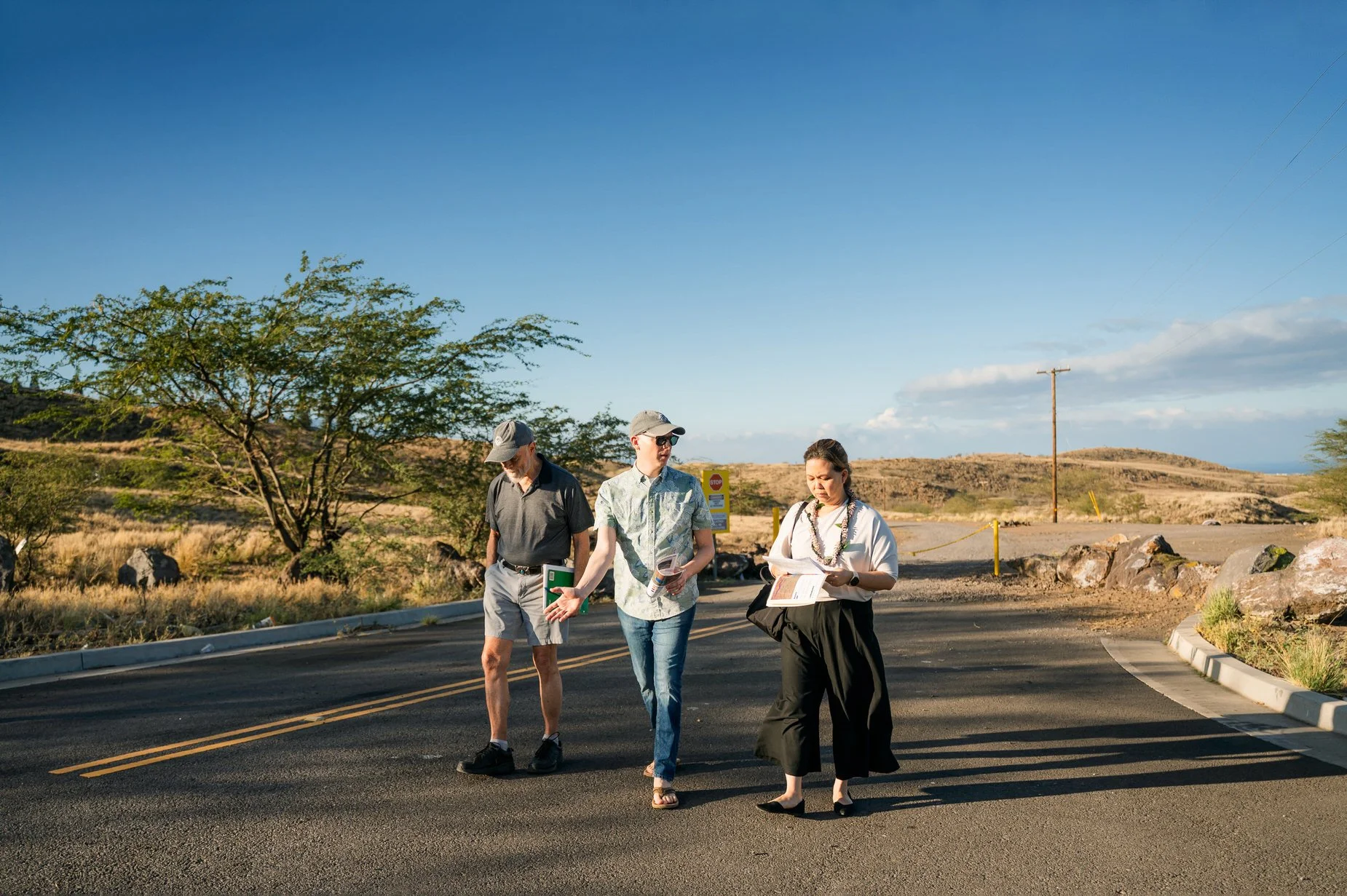
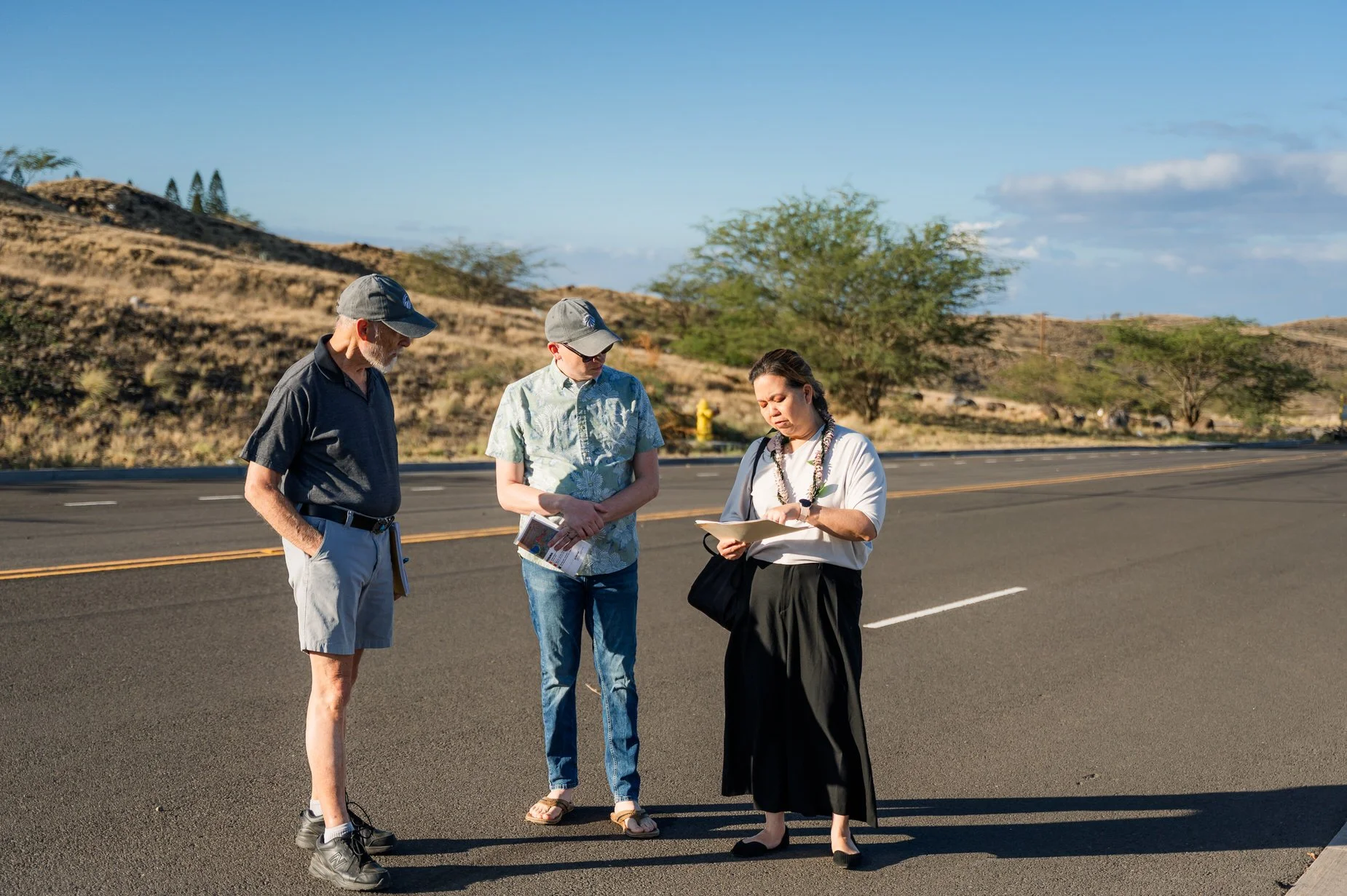
Earlier this week, Wildfire Safety Advocates had the opportunity to spend time with U.S. Congresswoman Jill Tokuda during her visit to Hawaiʻi Island. We met at Kamakoa Nui Park, at the northernmost end of Waikōloa Village, for a walking tour and conversation focused on wildfire risk, evacuation constraints, and the long-planned Waikōloa Village second road.
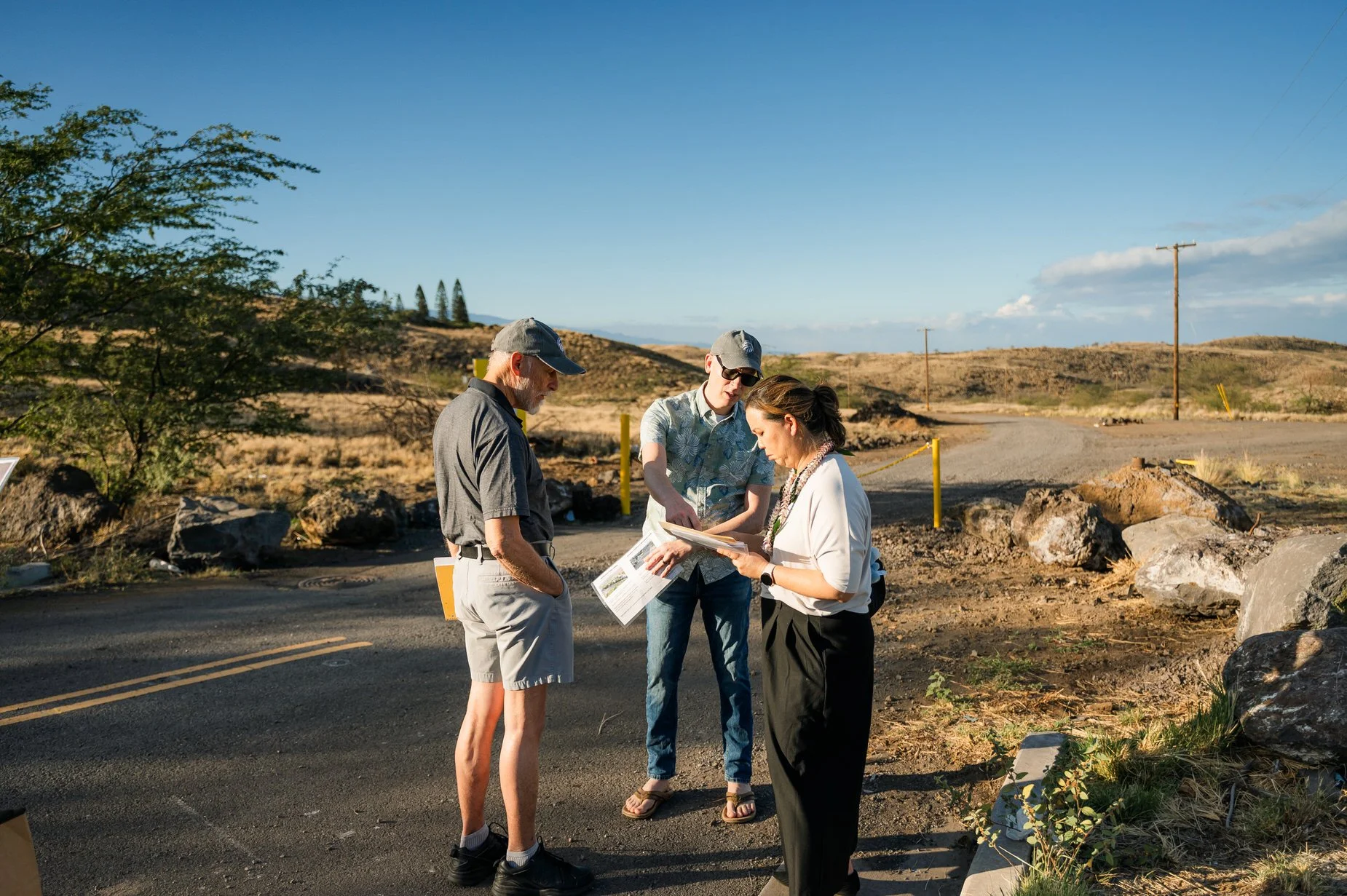
Photo Credit: Wildfire Safety Advocates
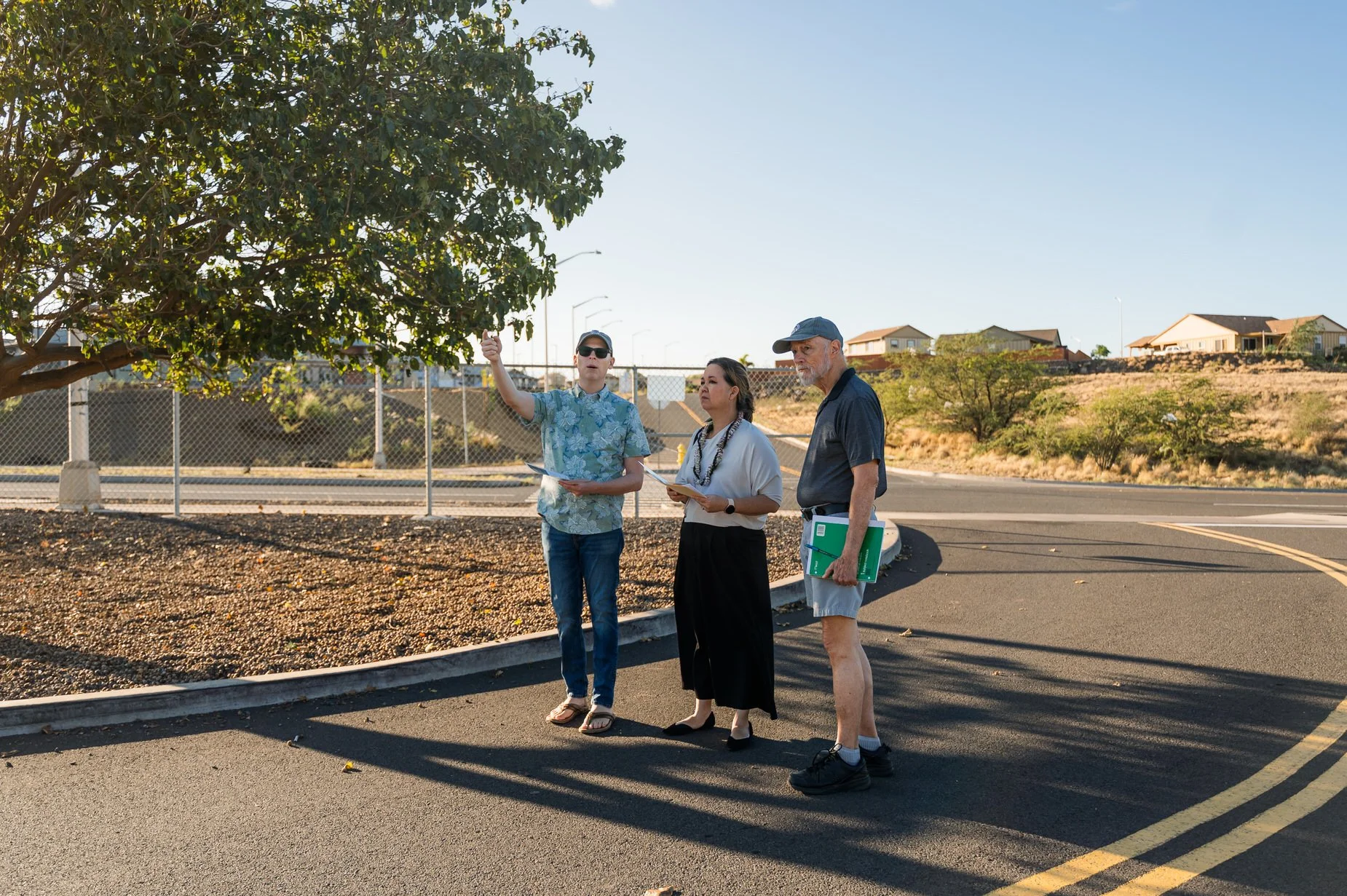
Congresswoman Jill Tokuda meets with Wildfire Safety Advocates at Kamakoa Nui Park, located at the north end of Waikōloa Village, to discuss wildfire risk, evacuation constraints, and the long-planned Waikōloa Village second road.
We chose this location deliberately. Kamakoa Nui Park sits at the far end of the village, requiring visitors to travel the full length of Paniolo Avenue before reaching it. Even without sharing the drive together, that experience alone communicates something essential. It shows the scale of the community, the distance residents must travel to reach the single exit, and how quickly dense housing transitions into open, fire-prone land.
Meeting at the north end of the village also allowed us to directly observe major current and planned developments, including Nana Kai and Nā Hale Makoa. These projects, spanning both luxury and workforce housing, will add significant new density to the portion of Waikōloa Village that is most exposed to wind-driven wildfire.
From the park, we walked to the end of Kamakoa Drive, where an unimproved utility access road descends toward the wastewater treatment plant. This road is widely understood by residents as the starting point of the long-discussed second road for Waikōloa Village, a potential evacuation and emergency access route that remains gated despite years of studies, plans, and assurances.
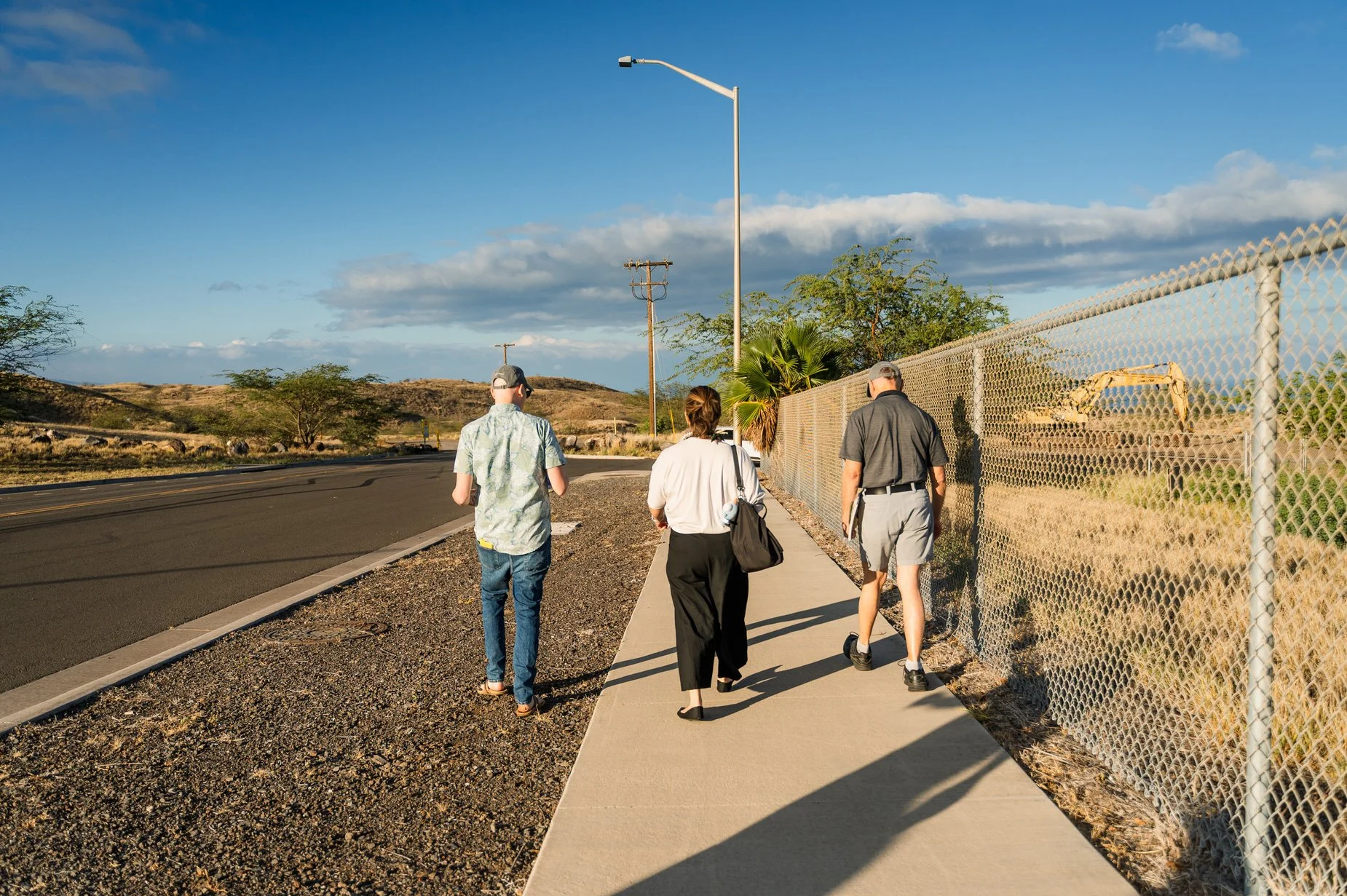
Photo Credit: Wildfire Safety Advocates
Walking discussion at the northern edge of Waikōloa Village, where distance, density, and exposure to wind-driven wildfire highlight the urgency of a second evacuation route.
From that same vantage point, we could also see the broader area where the County has proposed constructing more than 600 additional workforce housing units over the coming decade, without a clear or funded plan to deliver a permanent, functional second evacuation road before that growth occurs.
Congresswoman Tokuda engaged deeply with what she saw. She asked detailed questions about how County processes work in practice, who the key decision-makers and stakeholders are, what local support looks like, and how timelines for different infrastructure options compare. She also focused on practical considerations, such as building materials and construction choices, that directly influence fire behavior and evacuation risk.
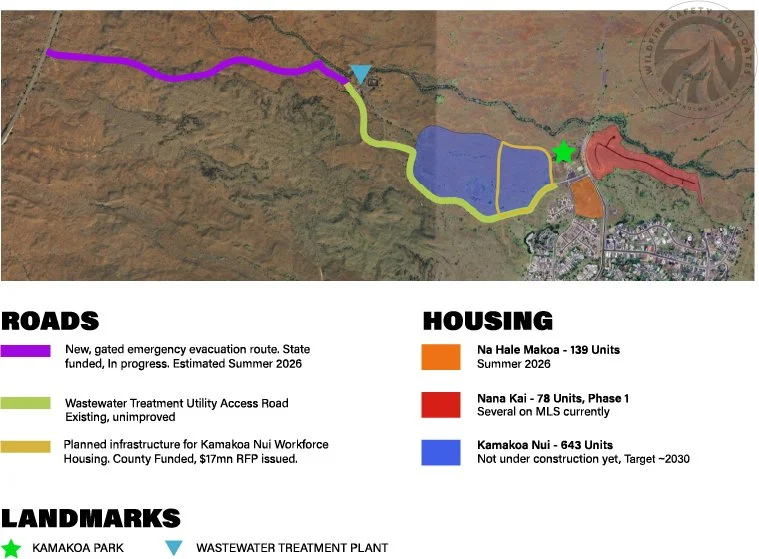
Photo Credit: Wildfire Safety Advocates
Annotated maps highlighting current development, fuel conditions, and access limitations, helping contextualize why evacuation modeling and infrastructure timing matter.
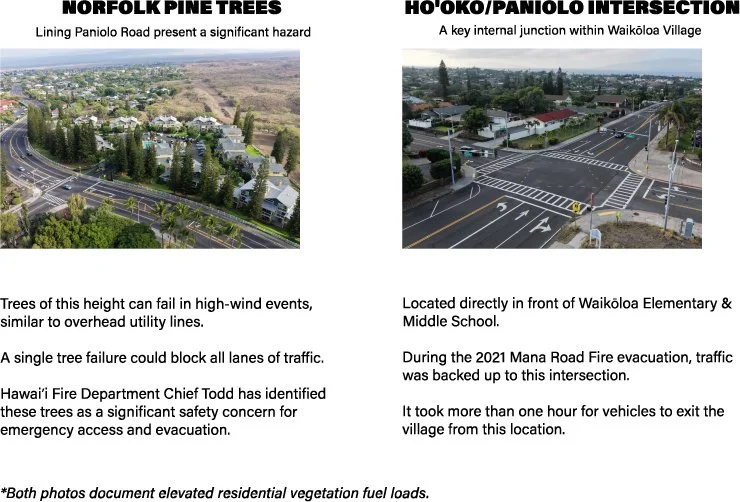
Photo Credit: Wildfire Safety Advocates
Visual overview of wildfire exposure used to explain why a permanent second road is critical for life safety as Waikōloa Village continues to grow.
We discussed what plans currently exist, what plans do not, and why a widening gap remains between what is written on paper and what residents need for safety on the ground. There are no simple or immediate fixes, and no single action that resolves this overnight. Still, the Congresswoman expressed a willingness to stay engaged, explore creative pathways including potential federal funding opportunities, and follow up directly with County leadership to better understand where and why progress on the Waikōloa Village second road has stalled.
Most importantly, she witnessed the hazard firsthand.
For a community of roughly 7,000 residents, that matters. The scale, geography, and urgency of Waikōloa Village’s wildfire risk are difficult to convey through reports, emails, or testimony alone. Seeing the distance, the density, the fuel conditions, and the single choke point at Paniolo Avenue and Waikōloa Road changes the conversation in a way no document can.
This visit represents an important step. It reflects good-faith engagement grounded in firsthand observation and serious attention. For our community, having federal leadership see these conditions directly brings a level of visibility and understanding that is essential to making progress.
For more background on the history, planning status, and safety importance of this project, visit our Waikōloa Village Second Road FAQ.
We are grateful for Congresswoman Tokuda’s time and her willingness to engage directly with residents. Wildfire Safety Advocates will continue working locally to push for practical, complete solutions and to keep the community informed as efforts to advance the Waikōloa Village second road move forward.