Taking Matters Into Our Own Hands: Community-Led Fire Prevention is Both Inspiring and a Sign of Systemic Failure
Article Summary.
"Hawaii Has Done Little To Shore Up Neighborhoods Against Fire. Some Are Doing It Themselves." (Honolulu Civil Beat, Aug 8, 2024)
This in-depth Civil Beat article highlights a critical gap in Hawaii's wildfire preparedness: the significant shortage of state and county funding and resources for community-level fuel mitigation and fire prevention. The report highlights how, in the absence of a coordinated government program, neighborhoods across the state—from the dry leeward coasts of Oahu to areas of Maui and Hawai'i Island—are taking initiative themselves.
The article details how these communities are forming non-profit associations, applying for complex federal grants, and organizing volunteer workdays to clear dangerously overgrown vegetation. It features the efforts of communities like our own in Waikoloa Village, as well as Kula and Lahaina on Maui, showcasing the immense hard work and dedication of residents. However, it also underscores the immense challenges they face, including bureaucratic hurdles, the physical difficulty of the job, and the sheer scale of the problem, which often feels like "spitting into the ocean."
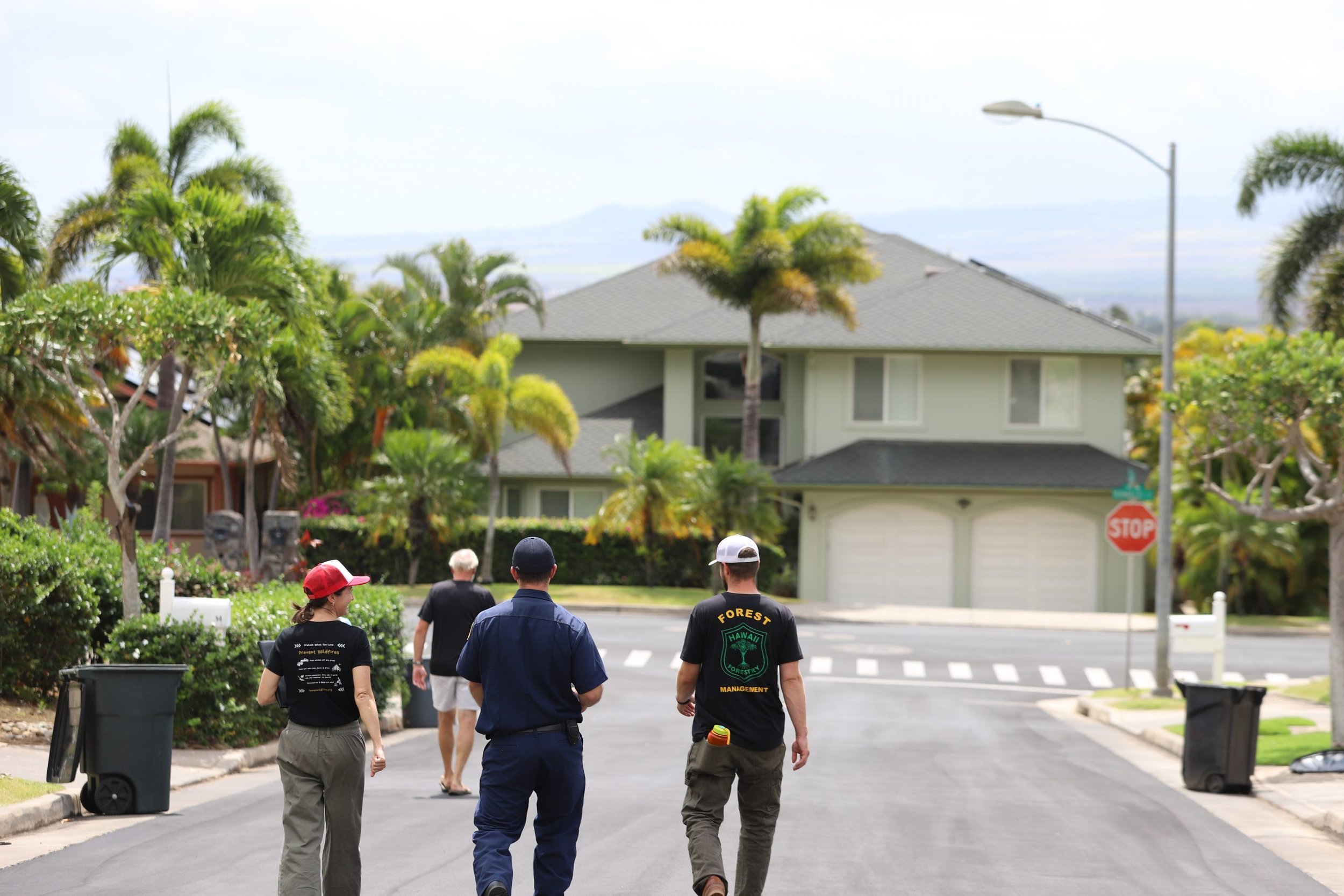
Thomas Heaton/Civil Beat/2024
Our Thoughts as Wildfire Safety Advocates:
This Story is Our Story: The article perfectly captures the reality we live in Waikoloa Village. It validates the enormous effort our community has already undertaken through volunteer clean-ups and advocacy. It’s both inspiring to see our fellow citizens highlighted and frustrating to see our situation mirrored across the state. A clear indicator of a systemic, top-down failure.
The "Grassroots Gap" is Unacceptable: Relying on volunteers and under-resourced community associations to shoulder the burden of wildfire prevention is not a strategy; it's an abdication of responsibility. While our work is crucial and empowering, it is neither sustainable nor scalable enough to meet the enormity of the threat of wildfires. We should not have to choose between funding road repaving and clearing potentially deadly fire fuels from around our homes. The state and county must establish and fund a dedicated program to support these community efforts with professional crews, equipment, and streamlined permitting processes.
A Call for a "Firewise" State: The article mentions the national Firewise USA® program, which provides a framework for communities to organize. This is a powerful tool, but obtaining and maintaining that designation requires significant work. We call on the State of Hawaii to not just encourage, but actively and financially subsidize and promote participation in such programs. This includes providing grant writers to help communities navigate the application process and offering matching funds for vegetation management projects.
In Conclusion:
The ingenuity and resilience of Hawaii's communities, as detailed in this article, are our greatest assets. However, we cannot allow this to become the permanent solution. Our volunteer work must be viewed as a stopgap measure, not the ultimate solution. We need to channel the momentum of these grassroots efforts into demanding that our state and local governments step up and provide the consistent, professional, and large-scale support that this crisis demands. Our safety depends on a true partnership, not just citizen heroism.
Read the full article from Honolulu Civil Beat here: Hawaii Has Done Little To Shore Up Neighborhoods Against Fire. Some Are Doing It Themselves.